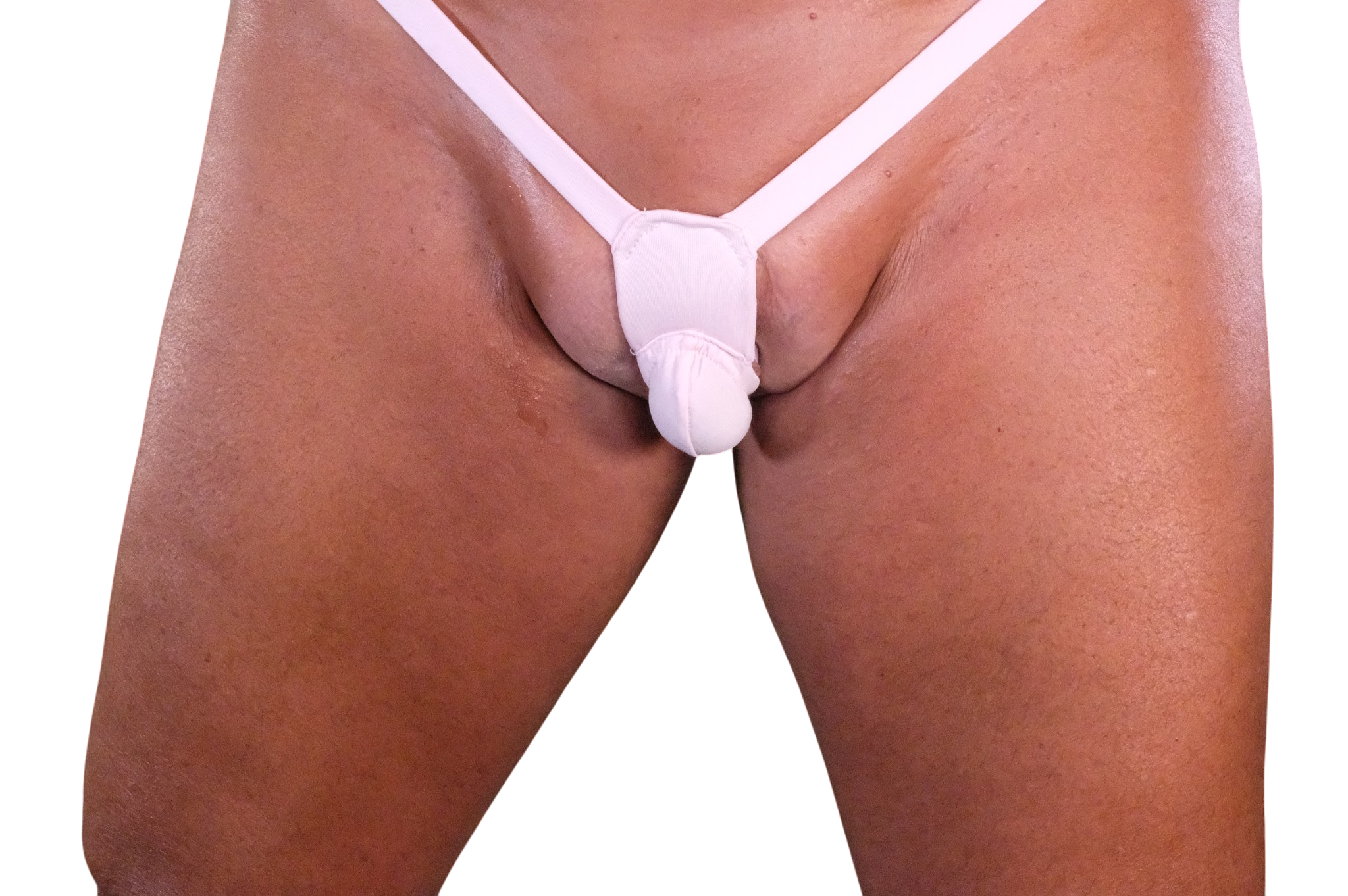
Spandex Swimwear Is Getting Smaller: The Rise of Micro and Ultra-Micro Designs
Walk along a fashionable beach, resort pool, cruise-ship deck, or tropical vacation destination and one change in swimwear is increasingly hard to miss:
Swimsuits are getting smaller.
For women, the progression from traditional bikinis to Brazilian bottoms, string bikinis, thongs, G-strings, micro bikinis, and ultra-micro designs has been developing for years.
Men’s swimwear is now experiencing its own version of that transformation.
The difference is dramatic. Men who once considered a traditional Speedo-style swim brief daring can now choose bikinis, string bikinis, Brazilian cuts, thongs, G-strings, micro pouches, and ultra-micro swimsuits. At the extreme end, some men’s designs can contain as little—or even less—fabric than the tiny swimsuits being worn by women.
The result is a fascinating convergence in beach fashion. Instead of men’s and women’s swimwear moving in separate directions, both are exploring the same question:
Just how small can a swimsuit become while still functioning as a swimsuit?
Spandex Changed What a Swimsuit Could Be
The micro-swimsuit revolution would be much more difficult without modern stretch fabrics.
Spandex and elastane blends allow fabric to stretch around the body, move with the wearer, and recover toward their original dimensions. That gives designers tremendous freedom.
A swimsuit doesn’t necessarily need wide side panels anymore.
They can become narrow straps.
A conventional rear can become Brazilian.
Brazilian can become a thong.
A thong can become a G-string.
A bikini front can become a micro front.
And a micro can be reduced even further into an ultra-micro.
Instead of using fabric simply to cover the body, designers can use stretch, tension, seams, straps, and carefully shaped panels to provide strategic coverage with remarkably little material.
That is one reason spandex has become so important to extreme swimwear design.
Women’s Swimwear Led the Way
Women have been pushing the limits of minimal swimwear for decades.
The classic bikini was revolutionary when it appeared, but by today’s standards many traditional bikinis provide considerable coverage.
Women’s fashion continued evolving:
Bikini bottoms became lower.
Leg openings became higher.
Side panels became narrower.
Tie-side bikinis became popular.
Brazilian backs exposed more cheek.
Thongs eliminated most rear coverage.
G-strings reduced it even further.
Micro bikini tops and bottoms dramatically reduced the dimensions of the remaining fabric.
Eventually the term ultra-micro bikini emerged for designs deliberately intended to take minimal coverage to the extreme.
What was once shocking gradually became another branch of swimwear fashion.
Men’s Swimwear Took a Different Route
Men’s swimwear followed almost the opposite path for a long time.
While women’s swimsuits were shrinking, men’s swimsuits in many markets actually became larger.
Board shorts are the perfect example.
For years, especially in the United States, men commonly wore loose shorts extending toward the knees. Compared with a woman’s bikini, a man’s swimsuit could contain an enormous amount of fabric.
Even traditional men’s racing briefs could be considered unusually revealing in places dominated by board shorts.
That situation is changing.
Specialty men’s swimwear now encompasses everything from conventional trunks and briefs to bikinis, strings, thongs, G-strings and exceptionally small micro designs.
Men are finally getting something women have enjoyed for decades:
A complete spectrum of coverage choices.
The Men’s Bikini Changed the Equation
The bikini was an important intermediate step.
Take the concept of a traditional men’s swim brief and reduce it.
Lower the waistband.
Raise the legs.
Narrow the sides.
Reduce the front and rear.
Suddenly you have something much closer to bikini styling.
From there, designers could continue removing fabric.
A typical progression might look like:
Board shorts → trunks → swim briefs → bikinis → micro bikinis → thongs → G-strings → ultra-micros.
There is no requirement for someone to move through that progression, of course. It simply illustrates how broad the modern range has become.
Yesterday’s incredibly revealing swimsuit can look almost conservative beside today’s smallest designs.
What Is Micro Swimwear?
There isn’t a universally accepted measurement at which a swimsuit officially becomes “micro.”
Micro is better understood as a design philosophy.
A micro swimsuit deliberately minimizes coverage.
That can mean:
- Lower rises
- Narrower sides
- Smaller front panels
- Smaller pouches on men’s designs
- Reduced bikini-bottom fronts
- Brazilian or cheeky backs
- Thong backs
- G-string backs
- String sides
- Extremely narrow waistbands
Importantly, micro doesn’t describe one specific shape.
A micro swimsuit could have a tiny front with a relatively conventional rear.
Another could combine a moderate front with a G-string rear.
Another could use strings everywhere possible.
Designers can reduce each portion independently.
Then Micro Became Ultra-Micro
Once micro swimwear became established, designers inevitably began pushing the concept further.
That is where ultra-micro swimwear comes in.
Ultra-micro designs intentionally explore the extreme end of minimal coverage. In men’s specialty swimwear, examples include exceptionally small front panels or pouches combined with very narrow straps, thong backs, or G-string construction.
Women’s ultra-micro bikinis follow a similar philosophy.
The traditional bikini triangle gets smaller.
The bottom gets narrower.
The sides turn into strings.
The back becomes increasingly minimal.
At some point, the swimsuit stops looking like a conventional garment that has been made smaller. It becomes a completely different approach to swimwear construction—tiny pieces of highly elastic fabric strategically positioned and connected by narrow straps.
Men and Women Are Meeting in the Middle—or at the Micro End
One of the most interesting aspects of this trend is the disappearance of the old assumption that women’s swimsuits are always smaller than men’s.
That is no longer necessarily true.
Imagine a couple walking onto a beach.
She is wearing a traditional bikini.
He is wearing a micro thong.
His swimsuit may contain considerably less fabric.
Or both might be wearing thongs.
Her thong might have a relatively conventional front while his has a tiny micro pouch.
Again, his swimsuit could be smaller.
At the opposite extreme, a woman wearing an ultra-micro string bikini could easily be wearing considerably less than a man in a conventional swim brief.
The important change isn’t determining who is wearing less.
It is that swimsuit size is becoming less connected to gender.
Women don’t automatically have to wear tiny swimsuits.
Men don’t automatically have to wear large ones.
Both can choose anywhere along the spectrum.
The Rise of the Spandex Thong
The thong has become particularly important because it removes one of the largest remaining areas of swimsuit material: the rear panel.
For women, thong bikini bottoms are already well established.
Men’s thong swimwear has also become increasingly diverse, particularly within specialty swimwear markets, where designs now range from relatively substantial thong briefs to string, micro-pouch, and ultra-micro constructions.
And once the rear disappears, designers naturally start looking at everything else.
Can the sides become thinner?
Yes.
Can the waistband become a string?
Yes.
Can the front become smaller?
Yes.
Can the entire garment become ultra-low-rise?
Yes.
The thong therefore becomes a natural platform for ultra-micro design.
G-Strings Take the Idea Even Further
The G-string represents another step toward minimum coverage.
Most conventional side and rear material disappears entirely.
The swimsuit essentially consists of a front panel connected to strings.
For women, that front can become an extremely small bikini panel.
For men, it can become an extremely compact anatomical pouch, compression front, or other specialized shape.
This is where comparing “men’s swimwear” and “women’s swimwear” based simply on the amount of fabric stops making much sense.
Both can become extraordinarily tiny.
Why Do People Want Smaller Swimsuits?
There isn’t one reason.
For some people, it is about tanning.
A smaller swimsuit produces smaller tan lines and exposes more skin to the sun—although appropriate sun protection remains important.
For others, it is simply fashion.
Some people love the visual simplicity of a tiny swimsuit.
Others like displaying their bodies.
Some enjoy pushing fashion boundaries.
Some find small spandex swimsuits more comfortable than wet, loose-fitting shorts.
A tiny swimsuit also contains very little material to become waterlogged.
Then there is confidence.
For some wearers, putting on a micro bikini or thong and discovering that they can comfortably walk onto a beach wearing it can feel surprisingly liberating.
The psychological progression can be interesting.
A person begins thinking:
“I could never wear that.”
Then they try it privately.
Eventually they wear it at a pool or beach.
After a while it doesn’t seem particularly extreme anymore.
Then they see something smaller.
That is how someone’s definition of “tiny” can keep changing.
Yesterday’s Micro Can Become Tomorrow’s Regular Bikini
Fashion constantly recalibrates our perception.
There was a period when a men’s traditional swim brief looked extremely small.
Then bikinis became smaller.
Then thongs looked radical.
Then micro thongs appeared.
Eventually ultra-micro designs pushed the boundary again.
Women’s swimwear has experienced much the same cycle.
Once the eye becomes accustomed to one level of coverage, the next reduction doesn’t necessarily seem as dramatic.
This doesn’t mean everyone will eventually wear ultra-micro swimwear. Most won’t.
It means that the existence of extreme designs can shift perceptions of everything else.
A conventional bikini can suddenly look relatively modest.
A men’s racing brief can look downright conservative beside a micro thong.
Ultra-Micro Doesn’t Have to Become Mainstream to Matter
It is important to distinguish between an emerging fashion category and the dominant form of swimwear.
Most people are not walking around public swimming pools wearing ultra-micro G-strings.
Traditional trunks, one-piece swimsuits, bikinis and swim briefs remain enormously important.
Ultra-micro swimwear exists at the extreme edge of the spectrum.
But fashion’s extremes often influence everything closer to the center.
Once people become accustomed to seeing micro bikinis, conventional bikinis don’t seem particularly revealing.
Once men’s thongs become familiar, traditional men’s bikinis seem less daring.
Once ultra-micros exist, a normal micro swimsuit doesn’t look quite so micro anymore.
That cultural shift can be more significant than the number of people actually wearing the smallest designs.
Smaller Swimsuits Require Better Engineering
Making a swimsuit smaller isn’t simply a matter of cutting away fabric.
In fact, designing a successful ultra-micro swimsuit can make fit more important.
When a conventional swimsuit has substantial material, there is some margin for error.
An ultra-micro has very little.
A small change in strap tension can matter.
A small difference in pouch dimensions can matter.
Stretch matters.
Fabric recovery matters.
Seam placement matters.
The swimsuit must continue providing its intended coverage while the wearer walks, sits, swims and moves around.
The smaller the swimsuit becomes, the more each remaining piece of fabric has to accomplish.
That makes fit more important, not less important, as coverage decreases.
Micro Swimwear and Body Confidence
Another encouraging development is the gradual weakening of the idea that someone needs a “perfect beach body” to wear small swimwear.
Beaches are filled with real people.
People are tall, short, thin, muscular, curvy, heavy, young, old and everything in between.
A bikini isn’t a prize someone earns by reaching a particular body-fat percentage.
Neither is a Speedo.
Neither is a thong.
Neither is a micro swimsuit.
Someone who enjoys minimal swimwear primarily needs a suit that fits properly, an appropriate setting, and enough confidence to enjoy wearing it.
Know Your Beach, Pool or Resort
As swimsuits become smaller, context becomes increasingly important.
A swimsuit appropriate at an adults-only tropical resort may not be appropriate at a family-oriented community pool.
Private resorts, hotels, cruise lines and clubs can establish dress requirements, while public-decency laws differ among jurisdictions.
That becomes particularly relevant with ultra-micro designs.
There is an important difference between extremely small and inadequate coverage.
Anyone experimenting with ultra-micro swimwear should make sure the swimsuit remains secure during normal movement and complies with the requirements of the location where it will be worn.
The Future May Be Less About Men’s Versus Women’s Swimwear
Perhaps the biggest long-term change isn’t simply that swimsuits are shrinking.
It is that the old gender divisions in swimwear design are becoming less rigid.
Women have borrowed athletic styling traditionally associated with men’s swimwear.
Men are adopting bikinis, Brazilian cuts, strings, thongs and other silhouettes historically marketed primarily to women.
Gender-neutral designs sit somewhere between traditional categories.
The result is an enormous spectrum.
A person can choose coverage based increasingly on personal style rather than old gender rules.
Want shorts?
Wear shorts.
Want a classic bikini?
Wear one.
Want a swim brief?
Great.
Want a thong?
That’s another option.
Want an ultra-micro?
There are designs at that end of the spectrum too.
How Small Can Spandex Swimwear Ultimately Become?
That may be the ultimate question behind the ultra-micro trend.
There is obviously a practical limit.
A swimsuit still needs to provide the coverage required by its wearer and setting, remain securely positioned, survive water and movement, and function as an actual garment.
But within those boundaries, modern stretch fabrics allow designers to accomplish an extraordinary amount with very little material.
And designers continue experimenting.
Smaller fronts.
Narrower straps.
Lower rises.
More stretch.
Less rear coverage.
More creative construction.
The challenge is no longer simply:
How do we make a swimsuit?
At the ultra-micro end of the market, the question becomes:
How much of the swimsuit can we remove and still have a swimsuit?
From Board Shorts to Ultra-Micros
Consider just how enormous the spectrum has become.
At one end is a pair of knee-length board shorts.
At the other is an ultra-micro spandex G-string consisting of a tiny front and a few narrow straps.
Both can be called swimwear.
Women’s fashion has a similarly remarkable range, from full-coverage one-piece swimsuits and swim dresses all the way down to ultra-micro string bikinis.
That range represents freedom.
There is no single correct amount of swimsuit anymore.
Conclusion: The Swimsuit Shrinking Contest Has No Winner
Perhaps the most entertaining part of modern micro-swimwear fashion is that men and women can now meet on surprisingly equal territory.
She can wear the smaller swimsuit.
He can wear the smaller swimsuit.
They can both wear tiny swimsuits.
Or neither needs to.
That’s the real evolution.
Spandex swimwear is getting smaller because designers finally have the materials, technology and fashion freedom to explore the extremes of minimal coverage.
Women helped pioneer that evolution through bikinis, strings, Brazilians, thongs and micros.
Men are now exploring many of those same silhouettes—and specialty men’s designs have expanded into micro and ultra-micro territory that can rival the smallest women’s styles.
The result is a beach-fashion world with fewer rules and considerably more choices.
From full coverage to barely-there ultra-micro, today’s swimsuit can be almost any size the wearer wants.
And for the people who believe the perfect swimsuit is always just a little smaller, modern spandex design is giving them plenty of room to find out just how micro they want to go.